
Well-Done Steak: How We Cook It at Bajamonti
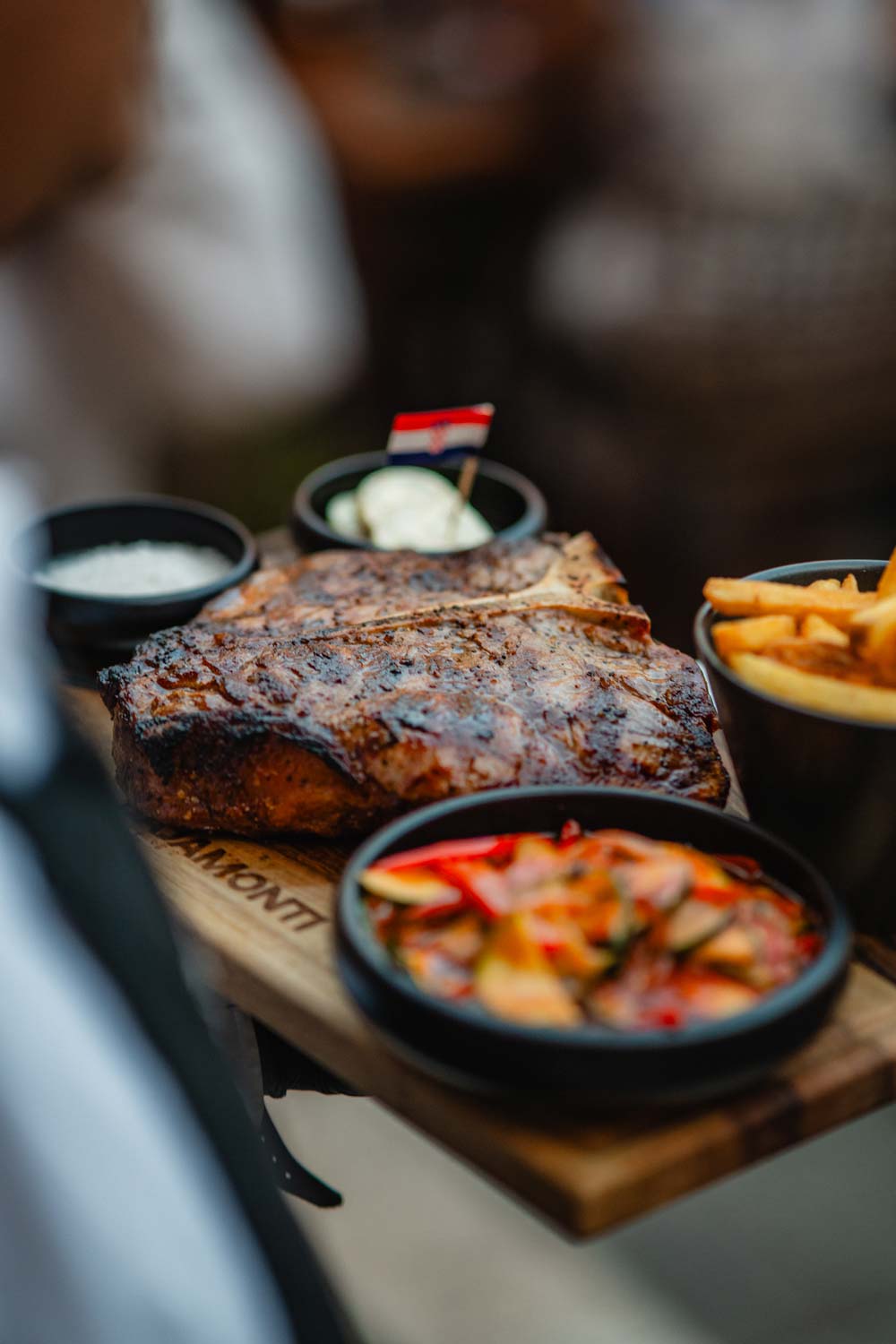
When a guest orders a well-done steak, we plan the cut and the fire around a final target of 71°C (160°F), with no pink left in the centre. That extra heat makes beef firmer and less moist, so the choice of cut matters from the start. We recommend a well-marbled, salt-aged rib eye because it retains more richness through a longer cook than leaner beef. We bring it up gradually away from the strongest heat, then move it over the open fire to build the crust. That is how we prepare well-done orders at our steakhouse on Prokurative.
What Well Done Means
A well-done steak finishes at 71°C (160°F), with no pink and a firm texture throughout. The challenge is reaching that centre temperature without pushing the outer layers too far beyond it, which is why the cut, heat level and probe reading all matter.
As beef approaches this temperature, its muscle fibres tighten and release more moisture. Marbling helps preserve richness and gives the cook more margin for error, although it cannot prevent moisture loss entirely.
Well done and overcooked are not the same thing. A steak brought deliberately to 71°C on a suitable cut is well done. One left over strong heat until it becomes unnecessarily dense and dry is overcooked.
Well Done Compared to the Other Doneness Levels
The doneness ladder is not a set of chef preferences. Each level corresponds to a different range of heat-driven changes in muscle proteins. Guests experience those changes as differences in firmness, moisture and colour.
| Doneness | Final internal temperature | Centre | Texture |
|---|---|---|---|
| Rare | 52°C / 126°F | Cool red centre | Soft and very juicy |
| Medium rare | 54 to 57°C / 129 to 135°F | Warm red centre | Tender and juicy |
| Medium | 60°C / 140°F | Warm pink centre | Firmer but still moist |
| Medium well | 66°C / 151°F | Trace of pink | Firm and less juicy |
| Well done | 71°C / 160°F | No pink | Firm throughout |
Those are finished temperatures, not the readings you should wait for before taking the steak off the heat. Its internal temperature continues to rise while the steak rests, so the pull temperature must account for carryover cooking. Our steak temperature guide explains how this works across the different doneness levels.
What Happens to the Meat at Well Done
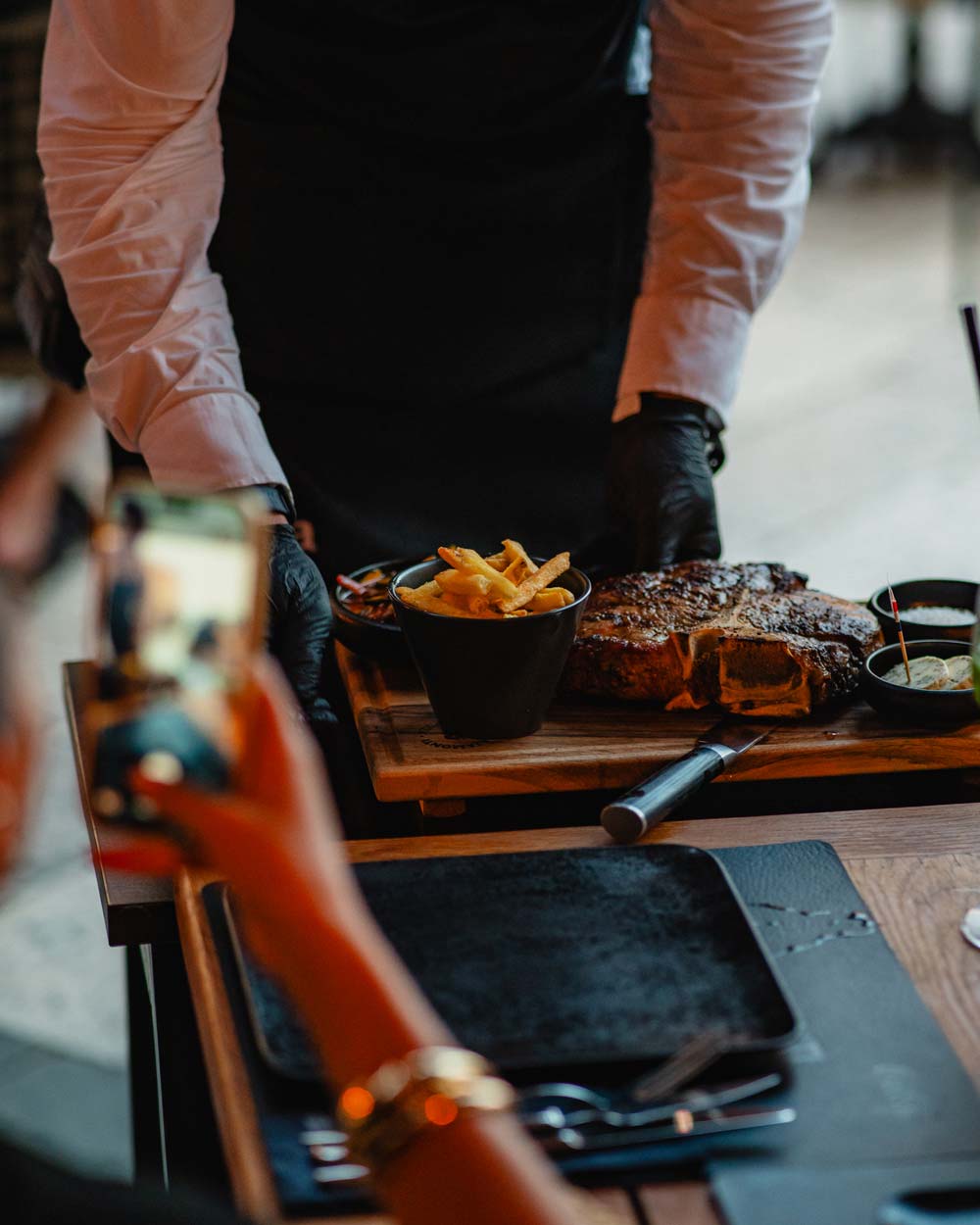
Muscle proteins denature in sequence as the temperature rises. Myosin begins to denature around 40°C and changes more sharply near 50°C, tightening the fibres across their width. Actin becomes particularly important here, denaturing between roughly 66 and 73°C. As this happens, the fibres shorten along their length, more liquid is forced out, and juiciness drops considerably.
Intramuscular fat softens as the temperature rises, helping preserve richness and a more lubricated mouthfeel even as the muscle loses moisture. Collagen also responds to heat, but meaningful conversion to gelatine takes time. During a conventional steak cook, the meat is not held at high temperature for long enough to convert much of it. At 71°C, marbling contributes far more to the steak’s richness and texture than collagen does.
Flavour shifts along with texture. As the centre temperature rises, the distinctive mineral and nutty character of aged beef becomes less prominent, while the roasted, caramelised and savoury flavours of the crust become more pronounced. At well done, the balance therefore shifts towards the crust.
The Best Cuts for a Well-Done Steak
| Cut | At well done | Why |
|---|---|---|
| Rib eye | Works well | Heavy marbling preserves richness as the fibres tighten |
| Salt-aged rib eye | Works well | Marbling preserves richness, while the drier meat supports a crust |
| Striploin | Acceptable | Moderate fat cap, but it needs careful handling |
| Tenderloin | Poor | Very lean and loses its characteristic softness as the heat rises |
| Flank | Poor | Lean and fibrous, so it becomes tough at the higher temperature |
| Wagyu A5 cuts | Possible, with trade-offs | More fat renders and some of the signature softness becomes less evident |
Cut and technique always work together, but a lean cut leaves much less room for error at 71°C. Careful temperature control can limit moisture loss, but it cannot give a lean cut the same margin for error as a well-marbled rib eye. That is why understanding the differences between steak cuts becomes especially important when ordering a steak well done.
Thickness matters too. A thick cut takes longer to reach temperature, and that only works against it if it stays over strong direct heat the whole time. Brought up gently first, the extra thickness turns into an advantage, because the centre has time to catch up before the outer layers overcook.
Marbled Cuts That Hold Up
Rib eye handles it best because its marbling is distributed through the muscle rather than sitting only around the edge. As the fibres tighten, that fat preserves richness and a more lubricated mouthfeel, which is why two steaks finished at the same 71°C can taste very differently. Our 300g salt-aged rib eye comes from Kettyle Irish Foods and is aged for 28 days. The salt-ageing process also reduces surface moisture, helping the steak form a stronger crust.
Lean Cuts That Do Not
Tenderloin, flank and cuts like them carry very little intramuscular fat. As the fibres tighten and moisture falls, there is little marbling left to preserve richness. Tenderloin loses the soft texture it is valued for, while flank, already fibrous, becomes tougher.
That does not make a lean cut the wrong choice. It simply means our team will explain what changes before the steak reaches the table, so you can stay with your choice or move to something with more fat.
Dry-Aged and A5 Cuts
Dry-aged beef and Wagyu A5 lose some of the qualities that distinguish them as the final temperature rises. Dry ageing concentrates the beef’s flavour, while A5 is valued for its exceptionally high marbling and soft texture.
You can see these differences across our steak selection. Our T-bone is dry-aged for 40 days, while the rib eye is salt-aged for 28. A5 is Japan’s highest combined yield and quality grade, not simply a marbling grade, and its fat has a lower melting point than the fat from many other cattle breeds.
Take either to well done and some of that marbling is lost. More of the Wagyu fat renders, leaving the steak rich but less soft than it would be at a lower final temperature. We will cook it that way if that is how you want it. The trade is worth knowing before you order rather than after the plate arrives.
How to Cook a Well-Done Steak Without Unnecessary Dryness
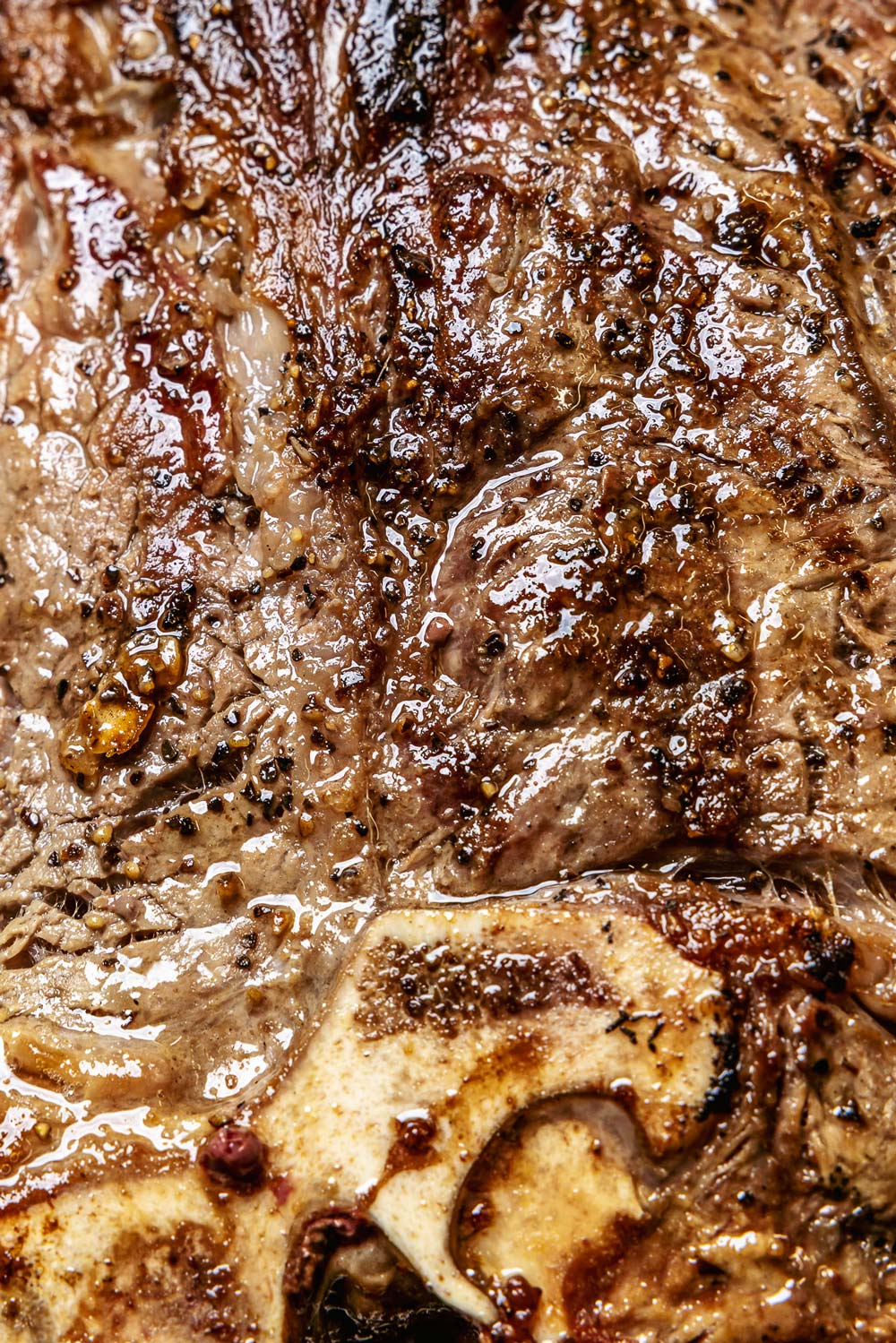
For well-done orders, we reverse the usual sequence. We begin with gentler heat to bring the centre up slowly, then finish over stronger heat for the crust. At Bajamonti, that means starting at the quieter end of the open fire. At home, a low oven or the cooler side of a grill follows the same principle.
- Choose a thick, well-marbled cut. Rib eye gives you more margin for error than tenderloin or flank because its intramuscular fat preserves richness as the meat cooks.
- Begin over gentler heat. At home, use a low oven or the cooler side of a grill. This brings the centre towards the target without forcing the outside too far ahead.
- Finish over stronger heat. Move the steak over direct heat once the centre is close, giving the outside enough time to develop a proper crust.
- Use temperature rather than time. Remove the steak just below its final target and allow carryover heat to bring the centre up to 71°C during the rest. The exact rise depends on the steak’s thickness and the intensity of the final sear.
What to Pair With a Well-Done Steak
We treat well done as a normal order and plan for it from the first minute. Tell us your preferred doneness first, and we can suggest a cut that retains more richness through the longer cook.
A firmer steak takes well to richness beside it. Among the sauces and sides on our menu, gorgonzola and black truffle both add richness, while BBQ brings sweetness against the crust. Truffle mashed potatoes give the steak something soft to pair with, and grilled vegetables or a salad keep the plate from turning heavy. We would avoid drowning the steak in sauce, because the crust is the best part of a well-done steak and everything else on the plate should complement it rather than cover it.
For wine, a firmer, more caramelised steak pairs well with red that has softer tannins and enough fruit to meet the crust. With less fat and moisture in each bite, a highly tannic red can feel more astringent than it would beside a medium-rare steak. A fruit-forward rosé can also work better than many guests expect. For a specific match, ask our staff for a suggestion from the wines on our list.
How We Cook Well-Done Steak at Bajamonti
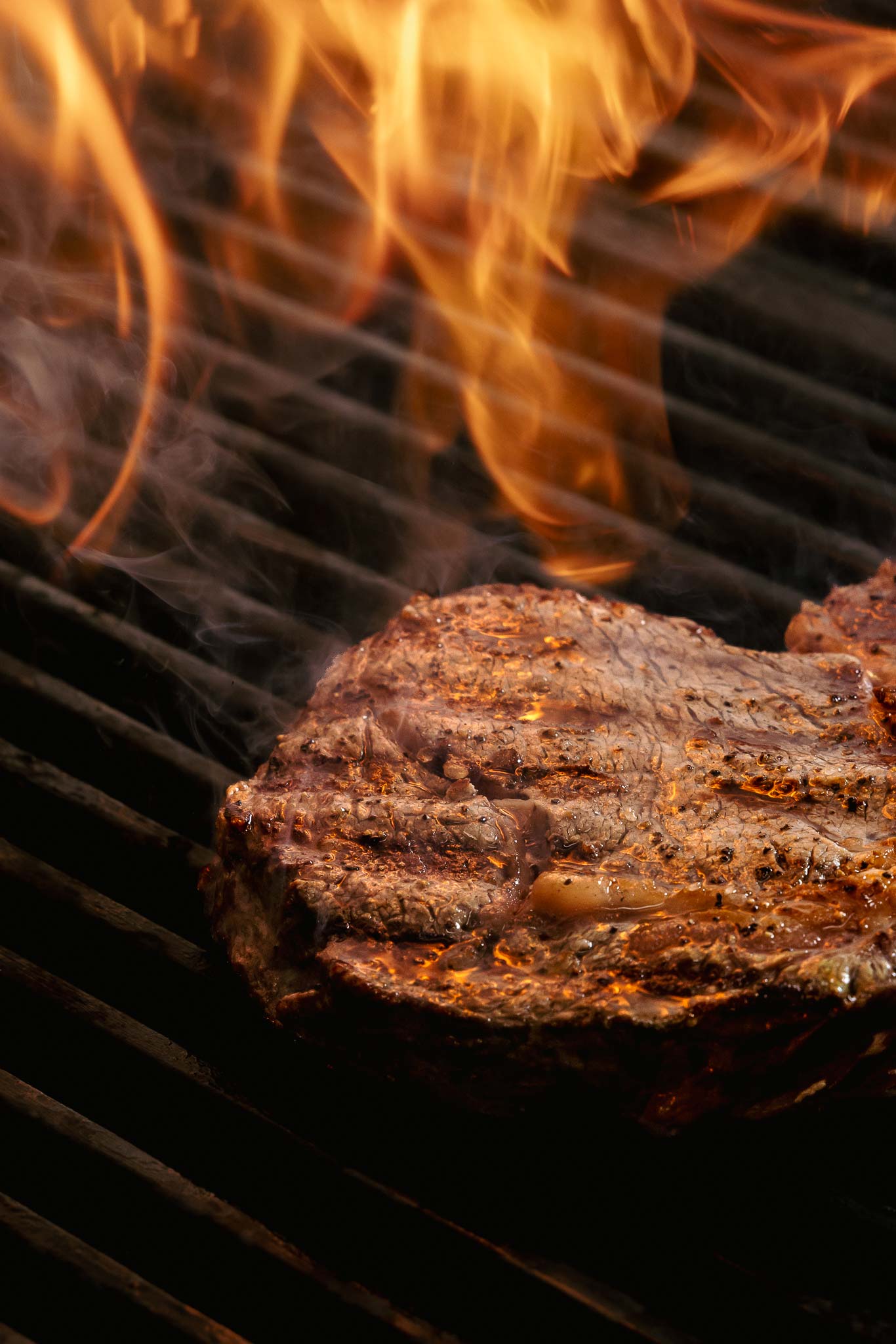
Every steak is cooked to the doneness our guests prefer, including well done. What changes is which cut we suggest. The rib eye has both the marbling to carry a longer cook and, in its salt-aged form, the dry surface to build a crust while it does. The T-bone is our longest-aged cut at 40 days, and given both its aging and its thickness on the bone, it is not the cut we recommend for well-done orders.
On the open fire, we start the steak in a quieter zone and move it across for the final sear once the centre is close. We remove it before it reaches 71°C and let the rest carry the last few degrees. Those final degrees separate firm from unnecessarily dry.
Our four dry-agers are visible from the entrance, while Prokurative opens towards the sea just outside. Book a table at Bajamonti and tell us how you want it cooked when you sit down.
FAQ
How long does a well-done steak take to cook?
Cooking time depends on the steak’s thickness, its starting temperature, the cooking method and the target doneness. A thermometer is more reliable than a fixed number of minutes, particularly once the pink is gone.
How can you tell a steak is well done without a thermometer?
You cannot tell reliably. Once the pink is gone, colour, firmness and the look of the juices cannot distinguish 71°C accurately from an overshoot. We use a probe thermometer because it gives us the centre temperature directly.
Does a well-done steak still need to rest?
Yes. Resting allows carryover heat to finish the cook and reduces the amount of liquid released when the steak is cut. The time depends on thickness, and five to ten minutes suits most substantial steaks.
What is the grey band on a steak?
It is the grey ring of overcooked meat between the crust and the centre. It forms when the outside races ahead of the inside, so gentle heat first, with the hard sear saved for the end, keeps that ring thin.
Can Wagyu be cooked well done?
It can, although more of its fat renders and some of its signature softness is lost. When a guest wants a well done steak, we usually recommend a marbled rib eye that handles the higher final temperature more evenly.