
The History of Split: From Diocletian's Palace to the Modern City
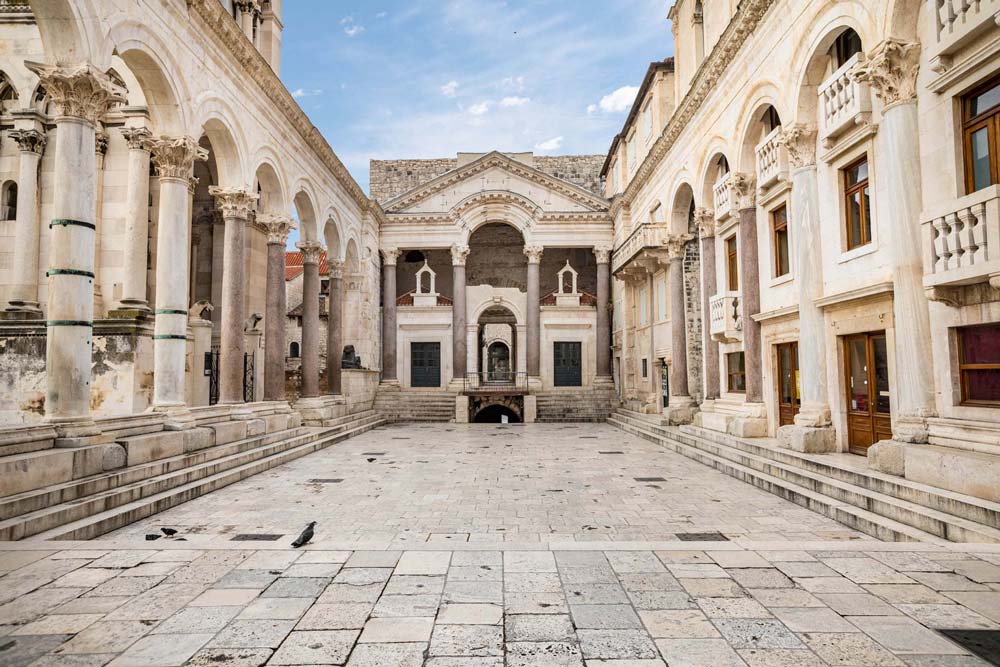
A walk through central Split crosses more than two thousand years of vibrant urban life. Greek settlers gave the area its earliest recorded name, a Roman emperor built a magnificent fortified seaside residence, and medieval families gradually transformed that compound into a thriving permanent neighborhood. Later, Venetian rule, Austrian administration, and visionary Mayor Antonio Bajamonti shaped the streets expanding beyond the ancient palace walls.
Split’s history remains remarkably visible today because each historic era seamlessly became part of the living city. Ancient Roman gates open onto bustling public squares, former imperial rooms now house charming homes and shops, and Prokurative Square welcomes residents and visitors along the Adriatic coast. Right on Prokurative, Restaurant Bajamonti on Prokurative Square brings this rich historical legacy into an inviting, modern restaurant setting.
A Timeline of Split's History
Split developed through several pivotal historic periods. This timeline provides a quick overview of its evolution before we explore each key era in greater detail below.
| Period | Key moment |
|---|---|
| Fourth to third century BC | Greek settlers established Aspálathos. |
| Roman era | Salona became the capital of Roman Dalmatia. |
| Around 305 AD | Diocletian retired to his seaside palace. |
| Seventh century | Refugees settled within the palace walls. |
| Middle Ages | The former residence grew into an old town. |
| 1420 to 1797 | Venice governed Split. |
| Nineteenth century | Austrian rule reshaped the expanding port. |
| 1860 to 1880 | Antonio Bajamonti led major civic projects. |
| 1991 onward | Split became part of independent Croatia. |
Before the Palace: Split's Ancient Roots
Settlement on the Split peninsula began long before Emperor Diocletian chose it for his retirement. A sheltered bay, easy access to neighboring Adriatic islands, and natural trade routes into inland Dalmatia made the location ideal for early travel and commerce. Anyone exploring Split, Croatia, enters a story that extends several centuries deeper than its best-known monument.
The Greek Colony of Aspálathos
Greek settlers established a small community called Aspálathos, also written as Spálathos, during the fourth or third century BC. Historians widely connect the name with a yellow flowering shrub found along the Dalmatian coast. The settlement likely supported trade between Greek island colonies and mainland communities.
Why is Split called Split?
The modern name evolved through centuries of linguistic transformation. The Greek Aspálathos morphed into the Latin Spalatum, evolved into the Italian Spalato, and ultimately became Split in Croatian.
What was Split called in Roman times?
Romans used Spalatum. An older theory connected the name with the Latin word palatium, meaning palace, but historical linguistics confirms that the ancient Greek name provides the true origin.
Roman Salona Next Door
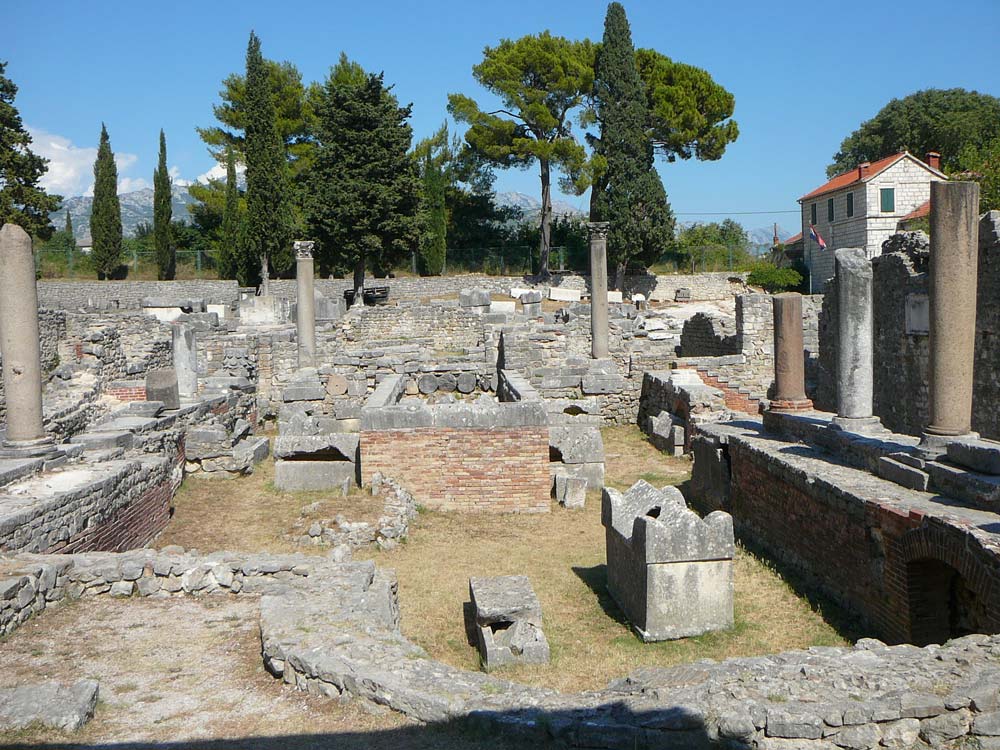
Just a few miles inland, near modern-day Solin, lay Salona. As the thriving capital of Roman Dalmatia, it contained administrative buildings, public baths, basilicas, an amphitheater, workshops, and extensive residential areas. Its size and political importance made the nearby coast a logical location for an emperor’s retirement home.
When political instability, barbarian invasions, and eventual destruction weakened Salona during the 7th century, its fleeing inhabitants sought shelter inside Diocletian’s heavily fortified coastal estate. These refugees brought religious traditions, trades, civic knowledge, and family networks that supported the growth of a new community.
Diocletian's Palace: Where Split Was Born
The massive imperial compound provided the physical framework from which medieval Split emerged. Its formidable stone walls offered safety, imperial chambers became residential shelters, and Roman street grids dictated urban movement. Remarkably, much of this ancient Roman street layout continues to guide visitors walking through Split’s historic core today.
The Emperor Who Retired by the Sea
Diocletian ruled the Roman Empire from 284 to 305 AD. He reorganized the imperial government, strengthened the army, and introduced reforms across a territory that had become difficult for one ruler to control. Near the end of his reign, construction began on a residence close to his native Dalmatia.
Following his abdication in 305 AD, Diocletian retired to his coastal retreat. Positioned close to Salona and featuring direct maritime access to the Adriatic Sea, the complex seamlessly combined private apartments, military quarters, ceremonial areas, storage, and working spaces.
What the Palace Looked Like in Roman Times
The original compound covered about 30,000 square meters and followed an irregular rectangular plan. Thick walls, towers, and four monumental gates protected the site. Two main streets divided the interior into separate zones.
Diocletian’s apartments occupied the southern side, where windows and arcades faced the sea. Guards, servants, storage rooms, and workshops filled much of the northern half. At the center, the Peristyle formed a ceremonial courtyard beside the emperor’s mausoleum and the Temple of Jupiter.
Substructures beneath the private quarters supported the rooms above and leveled the sloping terrain. Their preserved layout now reveals how the imperial residence was arranged.
How a Palace Became a Living City
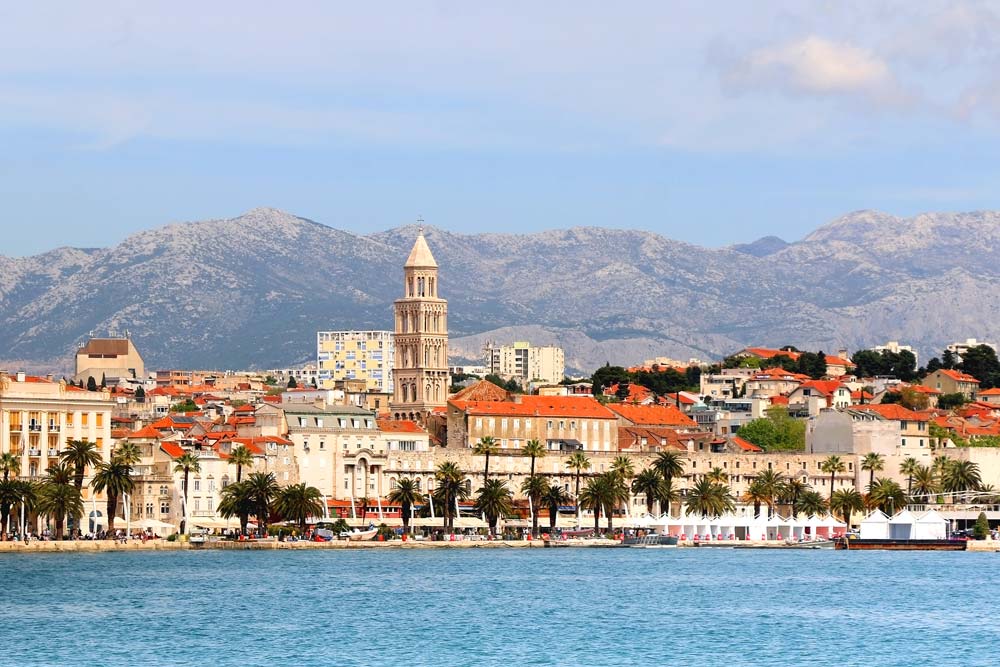
After Salona declined, new residents treated the palace as a secure haven to rebuild their community. Families divided large halls into smaller homes, opened passages through Roman masonry, and repurposed service rooms for work or storage.
Diocletian’s mausoleum became the Cathedral of Saint Domnius, while the Temple of Jupiter took on a new role as a baptistery. Houses filled open areas and leaned against older structures. Narrow lanes gradually replaced parts of the formal imperial layout.
People still live, work, worship, shop, and dine within the palace boundaries. Central Split remains a functioning neighborhood rather than an archaeological site separated from everyday life, which is part of what makes exploring Split Old Town so distinctive.
Life in Split Old Town Through the Middle Ages
Space was limited inside the Roman walls. In Split Old Town, medieval builders worked with what they inherited as the community expanded beyond the western walls. Ancient columns became part of later homes, corridors turned into lanes, and small churches appeared among imperial buildings.
Salona's Refugees and the First Old Town
The refugees fleeing Salona formed the resilient core of medieval Split. The palace’s formidable walls offered protection, while existing stone structures minimized the need for new construction. Church leadership also moved from the former regional capital, giving the settlement religious authority and continuity.
The Cathedral of St. Domnius became the center of public worship. Nearby spaces supported markets, meetings, and local government. Residents eventually built beyond the Roman boundary, especially west of the Iron Gate.
Everyday Life Inside the Palace Walls
A merchant might open a workshop along a former Roman passage, while a family could add an upper floor within a tall chamber. Builders reused carved stone in doorways, staircases, and smaller homes because suitable material already stood around them.
Markets supplied fish, olive oil, wine, grain, vegetables, and meat. Craftspeople worked close to home, religious processions filled public areas, and narrow lanes connected residents with the gates. Romanesque, Gothic, and Renaissance details gradually joined the ancient masonry.
Venice, Austria, and Centuries of Change
Split’s position on the Adriatic connected the city with regional powers that shaped its trade, architecture, government, and public spaces.
Four Hundred Years Under Venetian Rule
Split came under lasting Venetian control in 1420 and remained part of the Republic of Venice until its collapse in 1797. The port connected maritime routes with roads leading through the Dalmatian hinterland. Merchants traded salt, textiles, fish, wine, agricultural products, and goods arriving from other Adriatic cities.
Venetian influence appeared in civic institutions, noble residences, public squares, and local speech. Development moved beyond the palace toward People’s Square and nearby streets. Defensive construction remained important as conflict with the Ottoman Empire affected the surrounding region.
Writer Marko Marulić lived in Split during that period. His epic poem Judita, completed in 1501, became a landmark of Croatian literature.
The Austro-Hungarian City
Following the fall of Venice in 1797, Split fell under Austrian authority followed by French administration from 1806 to 1813. Officials improved roads, altered old fortifications, and opened the urban plan. Austrian control later returned and continued within Austria-Hungary until the end of World War I.
Under 19th-century Austro-Hungarian rule, Split rapidly modernized beyond its ancient perimeter. The city invested heavily in infrastructure – introducing gas street lighting, expanding the port, upgrading civic water supplies, and designing wide promenades. These public spaces gave residents new avenues for social life, dining, and cultural events.
Antonio Bajamonti and the Making of Modern Split
The introduction of running water, gas street lighting, and grand architectural projects highlights the ambitious spirit of 19th-century Split. Antonio Bajamonti, a physician and politician, served as mayor almost continuously from 1860 to 1880. Driven by a vision to transform the growing port into a modern European “city of the future,” he spearheaded transformative civic developments.
The Mayor Who Dreamed of a City of the Future
Mayor Bajamonti viewed modern infrastructure as the cornerstone of civic progress. Under his visionary leadership, Split gained gas-powered street lamps, an improved harbor, new financial and educational institutions, and iconic public structures.
One of his most ambitious achievements was restoring Diocletian’s ancient Roman aqueduct. Bringing fresh running water back into the city center modernized daily routines, freeing residents from relying solely on wells, springs, and local collection points. Roman engineering gained a new public role centuries after its original construction.
Though political debates over regional identity made Bajamonti a complex figure in Dalmatian history, his architectural and infrastructural achievements remain defining elements of Split’s urban landscape.
Prokurative Square and the Bajamonti Legacy
Republic Square, commonly called Prokurative, reflects the Italian architectural influence favored during Bajamonti’s era. Arcaded buildings frame three sides, while the open southern edge faces the seafront. The layout recalls formal public squares found across the Adriatic.
Prokurative became a setting for performances, celebrations, meetings, and political life. Its social role continues through concerts, festivals, restaurant terraces, and private gatherings.
Positioned right at Trg Republike 1, Restaurant Bajamonti occupies the heart of this historic square. Guests looking to experience this atmosphere firsthand can easily book a table at Bajamonti before visiting.
Split Today: A City Shaped by Its Past
Most residents now live well beyond the palace walls. Residential districts, university buildings, sports venues, beaches, shipyards, and port facilities show the city’s twentieth-century expansion. Despite this expansion, the historic center remains the beating heart of local daily life and cultural identity.
From Yugoslavia to Independent Croatia
After World War I, Split became part of the Kingdom of Serbs, Croats and Slovenes, later known as Yugoslavia. World War II brought Italian and German occupation, resistance, bombing, and heavy losses. Postwar decades produced rapid industrial growth and new housing across the peninsula.
Croatia declared independence in 1991. Split continued to develop as the country’s largest coastal city and an important center for transport, education, sport, culture, and tourism. Ferries from its port connect the mainland with Brač, Hvar, Vis, Šolta, and other Adriatic destinations.
A UNESCO World Heritage City
UNESCO added the Historical Complex of Split with the Palace of Diocletian to the World Heritage List in 1979. The protected area includes the Roman compound and later architecture that grew within and around it.
Recognition reflects the site’s unusual continuity. Imperial walls contain medieval churches, Gothic homes, Renaissance details, apartments, shops, and restaurants. Preservation involves a city center where historic spaces still serve practical needs. Visitors can experience that continuity, with the historic center active around them.
Where History Meets the Table at Bajamonti
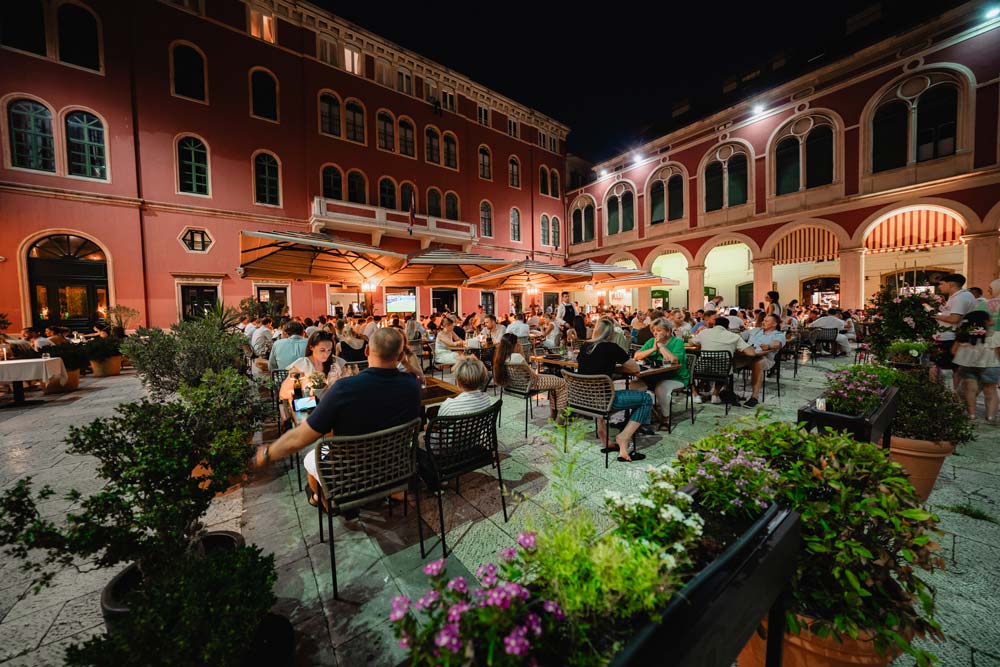
A journey through two thousand years of Split’s history ends naturally at Prokurative. Restaurant Bajamonti stands on the square connected with the mayor whose name the restaurant carries. Arriving here, guests walk across Roman paving stones, medieval alleys, Venetian piazzas, and 19th-century arcades.
Whether you start your morning with a relaxed breakfast in Split, stop by to explore our pizza selection for lunch, or indulge in fresh Adriatic seafood, premium steaks, and fine Croatian wine, Bajamonti offers a front-row seat to Split’s living history.
Walking the Old Town's Landmarks
Begin your walking tour at the monumental Golden Gate and follow the ancient Roman Cardo straight toward the majestic Peristyle. Here, visit the Cathedral of Saint Domnius inside Diocletian’s mausoleum and the nearby Temple of Jupiter. Pass through the Iron Gate onto People’s Square, where later civic buildings show how the town expanded beyond its Roman core. After discovering these ancient wonders, it’s an ideal time to unwind over one of our signature dry-aged steaks in Split.
From Pjaca, stroll along vibrant Marmontova Street toward Prokurative. The route passes the fish market before reaching the nineteenth-century square, where the city’s Adriatic character continues through fresh seafood dishes inspired by the coast. Carved doors, reused columns, hidden courtyards, and stone passages make the short walk worth taking slowly.
Dining on the Square Antonio Bajamonti Built
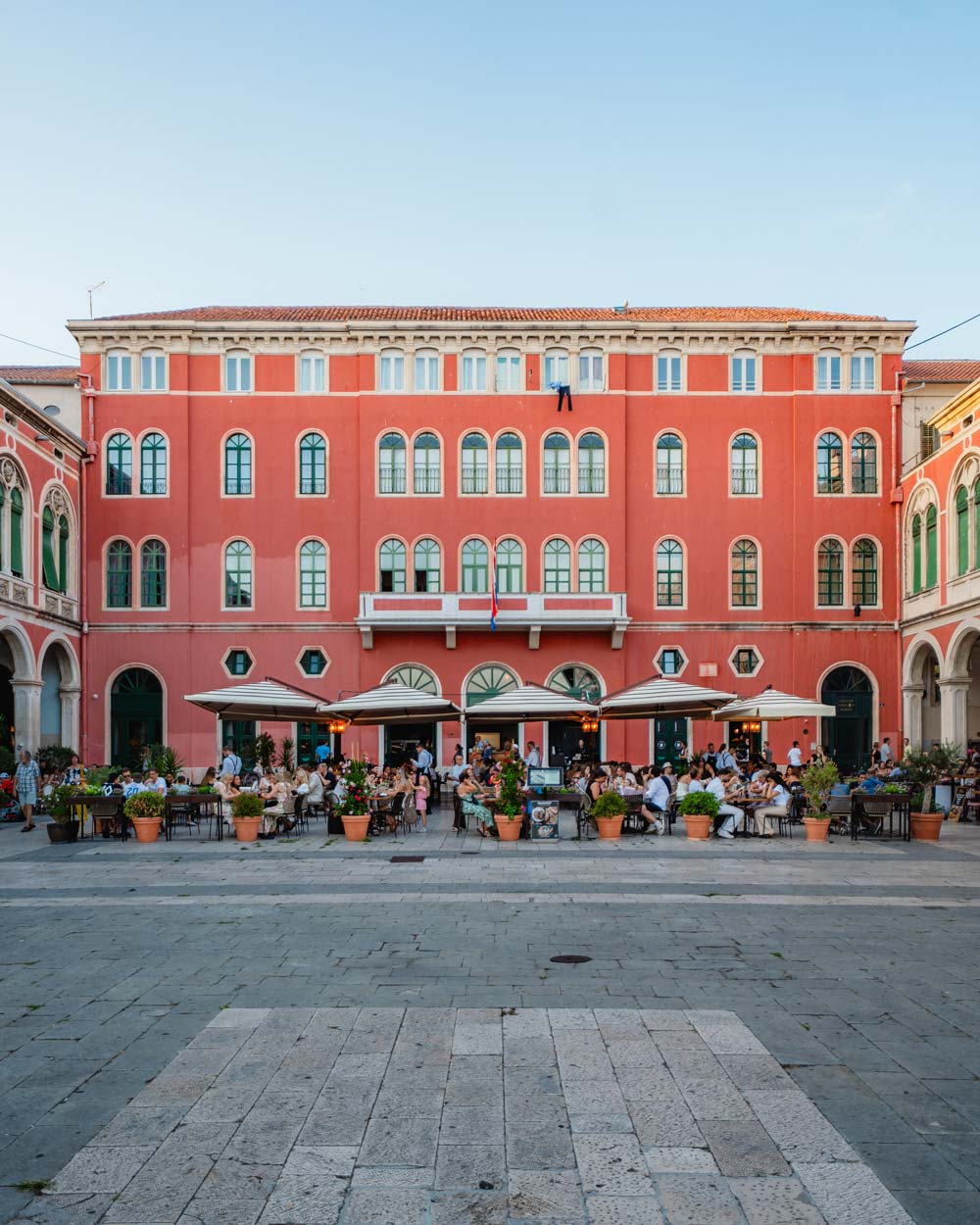
Bajamonti Pizza, Steak & Fish House is located at Trg Republike 1, sitting directly on Prokurative. Its spacious terrace offers prime views of the elegant red arcades, putting you right at the center of Mayor Bajamonti’s lasting legacy.
Our menu brings several sides of local dining together. Seafood lovers can savor Adriatic fish, traditional Dalmatian gregada fish stew, sea bass, monkfish, octopus, shellfish, and pasta. Meat enthusiasts can choose from premium dry-aged cuts, including impressive T-bone and Tomahawk steaks. Wood-fired pizzas, handmade pastas, hearty breakfasts, artisan desserts, and an extensive list of top-tier Croatian wines round out the experience.
A meal at Bajamontiseamlessly bridges Split’s storied past with its vibrant present. The restaurant carries the mayor’s name, occupies the square linked to his plans, and gives visitors a welcoming place to experience modern Split. Reservations are useful during busy summer evenings and for larger groups.
FAQ About Split History
How old is the city of Split?
Split’s recorded roots reach back roughly 2,300 years. The city centered on Diocletian’s Palace developed mainly after the seventh century.
Why is Split called Split?
Split’s name likely evolved from the Greek Aspálathos through the Roman Spalatum and Italian Spalato before reaching its modern Croatian form – Split.
Why is Diocletian's Palace so important?
Diocletian’s Palace is a rare Roman imperial residence that became a medieval town and remains the active center of Split today.
Is Diocletian's Palace still standing?
Large sections remain intact, including its gates, walls, cellars, Peristyle, former mausoleum, and streets filled with homes, shops, and restaurants.
What is Split Old Town known for?
Split Old Town is known for Diocletian’s Palace, medieval lanes, historic squares, seafront access, layered architecture, restaurants, shops, and occupied ancient buildings.
Who was Antonio Bajamonti?
Antonio Bajamonti was a 19th-century mayor who spearheaded Split’s modernization – restoring the Roman aqueduct, introducing gas lighting, and expanding the harbor.