
Exploring Split Old Town: What to See, Do, and Eat
Split Old Town packs Roman ruins, sun-warmed squares, hidden chapels, and sea views into a few blocks you can cross on foot in twenty minutes. The list of things to do in Split Old Town runs long for such a small footprint.
You can stand inside a 1,700-year-old palace, head up a bell tower for a view across the Adriatic, rub a bronze toe for luck, and end the evening over dinner by the sea. A day here moves at its own pace, easy to fill yet hard to rush.
What follows covers the sights that earn a stop, the quiet corners most visitors miss, and what to order once your feet need a break.
Why Split Old Town Feels So Special
Most historic centers fence off their monuments. Split does the opposite. People live inside Diocletian’s Palace, hang laundry between Roman columns, and run cafes from rooms an emperor once used. The Old Town grew through the ruins instead of around them, so the past and daily life share the same stone walls.
That mix gives the place its pull. You get layered history, a working harbor, narrow lanes that open onto bright squares, and the sea always close by. Morning light turns the limestone pale gold. By evening the same streets fill with music and the smell of grilled fish. Few small centers hold this much in such a tight space.
Best Things to Do in Split Old Town
The best things to do in Split Old Town sit within a few minutes’ walk of each other, so you rarely need a map for long. Roman gates, a cathedral built from an emperor’s tomb, statues by Croatia’s most famous sculptor, and a seafront promenade all fall on one easy loop. Here is where to point your feet.
Explore Diocletian's Palace
Diocletian’s Palace is the centerpiece of any visit. The Roman emperor built it around 305 AD as a retirement compound, and the walls still mark the eastern half of the Old Town. Entry to the palace grounds is free, though a few interior sites charge a small ticket. The Peristyle, the Vestibule, and the cellars each show a different side of it.
Step Into the Peristyle Courtyard
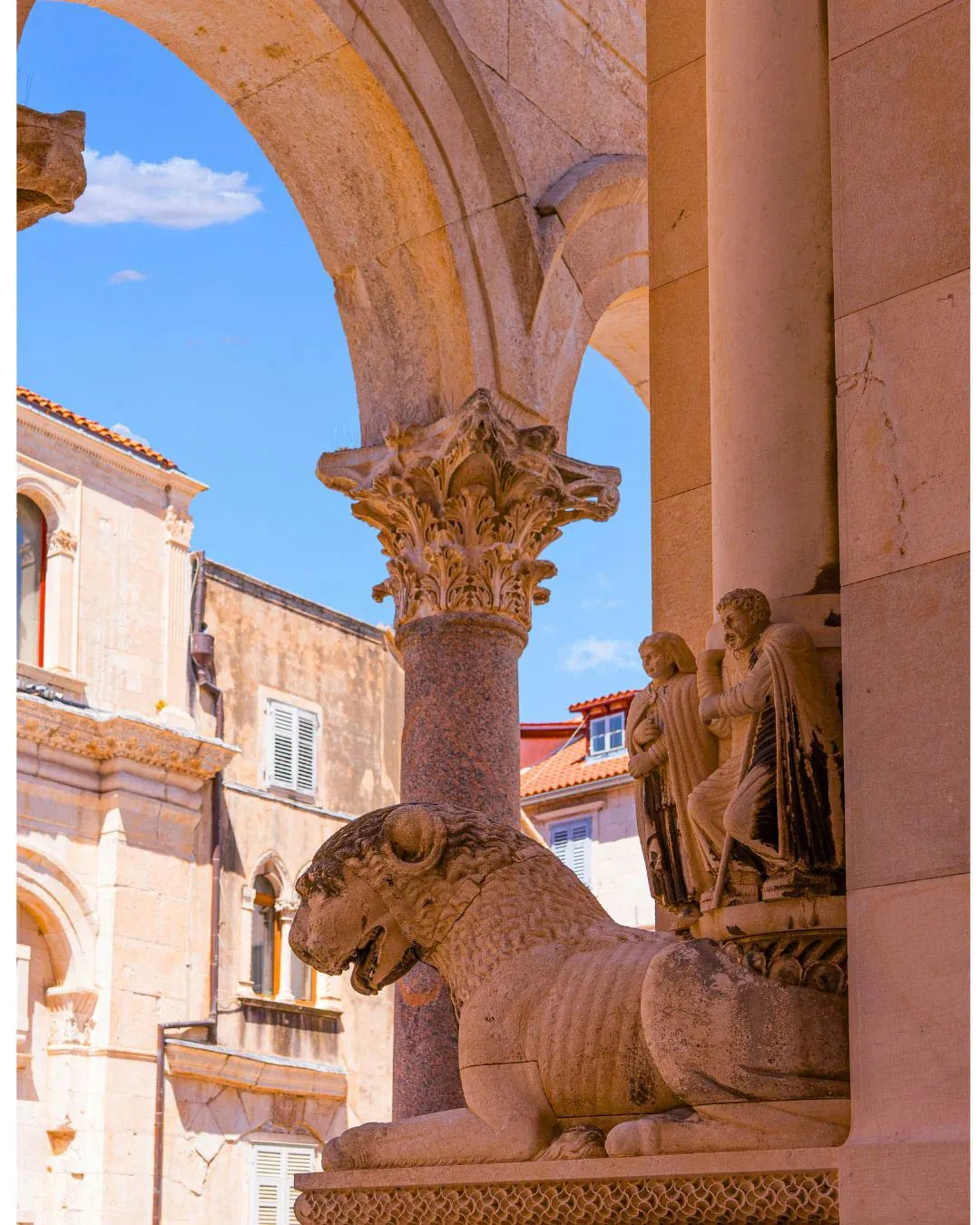
The Peristyle is the central square of the palace and its grandest room. Columns of pink granite frame the space, a black granite Egyptian sphinx over 3,500 years old still guards one corner, and the cathedral steps double as seating for a coffee. Diocletian once appeared here to crowds who treated him as a living god.
Today you sit on those same steps with an espresso while a busker sings. Arrive early and the courtyard is nearly yours.
Look Up Inside the Vestibule
The Vestibule was the grand entrance hall to the emperor’s private quarters. A round chamber once carried a dome covered in mosaics and marble. The top now opens straight to the sky, and the missing roof gives the room remarkable acoustics.
Klapa singers, performing the traditional a cappella harmony of Dalmatia, often stand here and let their voices fill the curve of the walls. Stop and listen for a minute. The sound alone is worth the detour.
Walk Through the Cellars of Diocletian's Palace
The cellars, or substructures, are the best-preserved part of the palace. Romans built these halls to support the imperial apartments above, and the layout below mirrors the rooms that once stood overhead. For centuries the space sat filled with rubble, which is partly why it survived so intact.
Game of Thrones fans will recognize the vaulted halls as Daenerys’s throne room and the place she kept her dragons. Market stalls and art shows fill parts of it now, while the main passage links the Riva to the Peristyle.
Climb the Bell Tower of St. Domnius
The Cathedral of St. Domnius began life as Diocletian’s mausoleum, which makes it one of the oldest buildings still used as a church anywhere. Its bell tower is the icon of the Split skyline. The climb runs up roughly 183 steps on open staircases, so skip it if heights unsettle you. The reward at the top is a 360-degree view over the red roofs of the Old Town, the harbor, and the islands beyond. Pick a clear morning and bring a steady hand for photos.
Visit the Temple of Jupiter
Down a narrow alley off the Peristyle stands the Temple of Jupiter, one of the most intact Roman temples on the Adriatic. A headless black sphinx, another of Diocletian’s Egyptian imports, guards the entrance.
Step inside to see the barrel-vaulted ceiling carved with rosettes and a baptismal font added when the building became the Baptistery of St. John. A bronze statue of John the Baptist by Ivan Meštrović stands at the center.
The alley itself carries the nickname Pusti me proć, meaning let me pass, because two people can barely squeeze by.
Walk Through the Golden Gate
The Golden Gate was the main northern entrance and the grandest of the palace’s four gates. Romans called it Porta Aurea, and it faced Salona, the regional capital of the day. Stonework above the arch still shows the niches where statues once stood.
Pass through it to reach the quieter northern edge of the Old Town. One of Split’s most photographed landmarks waits a few steps beyond.
See the Gregory of Nin Statue
Right outside the Golden Gate towers the Gregory of Nin statue, a bronze giant by Ivan Meštrović from 1929. Gregory was a 10th-century bishop who fought to hold church services in Croatian rather than Latin, a stand that made him a national figure. The figure rises more than 8 meters.
Local custom says rubbing his left big toe brings good luck and a return trip to Split, and decades of hands have polished that toe to a bright gold. Join the line and give it a rub.

Stroll Along the Riva Waterfront
The Riva is the palm-lined promenade between the palace and the sea, and it works as the city’s open-air living room. Cafe tables face the water, ferries slide across the harbor, and locals walk its length most evenings. Morning brings quiet coffee and soft light. Late afternoon fills the benches and the bars.
For a first sense of Split, ten minutes on the Riva tells you most of what you need to know.
Explore People's Square and Fruit Square
Two squares anchor the social life of the Old Town. People’s Square, known locally as Pjaca, sits at the western edge of the palace and hums with cafes under a Venetian Gothic clock tower. A short walk south brings you to Fruit Square, named for the market that once filled it.
There a statue of the writer Marko Marulić, another Meštrović work, stands beside an octagonal Venetian tower. Grab a table at either one and watch the city pass.
Take in the Atmosphere of Prokurative
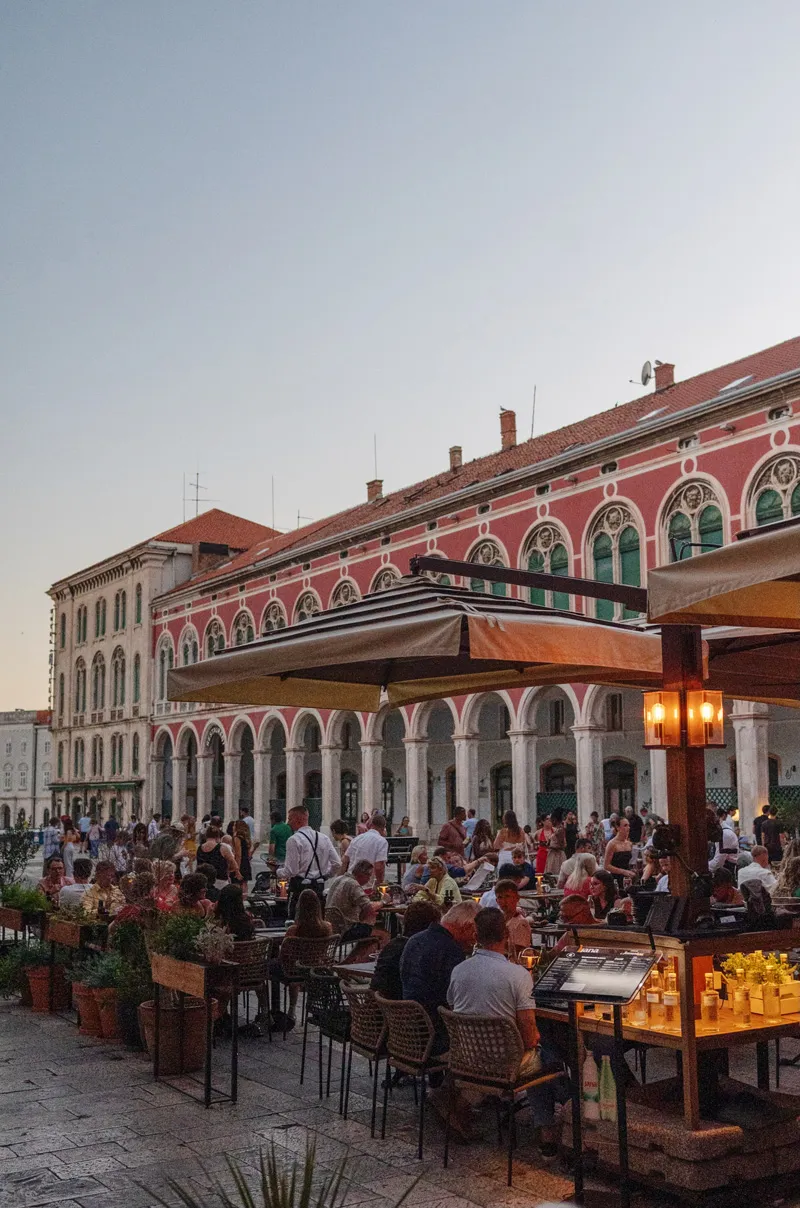
Prokurative, officially Republic Square, breaks from the medieval lanes around it. Three sides of arcaded Neo-Renaissance buildings open toward the sea, modeled loosely on St. Mark’s Square in Venice. The square owes its look to Antonio Bajamonti, the visionary 19th-century mayor who reshaped much of the city.
Concerts and festivals still fill the space through summer, so an evening here often comes with live music.
Hidden Corners of Split Old Town
The famous sights draw the crowds, but the Old Town keeps plenty in reserve. Step off the main routes and you find shaded courtyards, working markets, and views the tour groups never reach. A few favorites are below.
Quiet Alleys and Courtyards
Behind the Peristyle and around Veli Varoš, the lanes narrow until two people barely pass. Many open without warning onto small courtyards with a single cafe, a stone bench, or a fig tree pushing through the pavement.
Wander without a destination for half an hour. Getting mildly lost is part of the appeal, and the palace stays small enough that you surface near a landmark within minutes.
Local Markets Worth Visiting
The green market, called Pazar, spreads along the eastern palace wall and sells the produce locals actually cook with: tomatoes, figs, olive oil, cheese, and herbs from the hills. Nearby, the Fish Market, or Peškarija, runs every morning with the day’s catch laid out on marble slabs.
Both reward an early visit before the heat. Even if you buy nothing, a walk through them shows how Split eats.
Lesser-Known Photo Spots
Skip the obvious angles for a while. The view from the bell tower gets all the attention, yet the rooftop terrace bars near the Peristyle frame the cathedral well with a drink in hand. The Matejuška fishing harbor at the western end of the Riva catches the best sunset light.
For a quiet shot of the palace gates, come back after dinner once the day-trippers have left and the stone glows under the lamps.
Where to Eat in Split Old Town
A day on your feet earns a proper Dalmatian meal. We run a few kitchens in and around the Old Town, each suited to a different craving once the walking is done.
Steak and Dalmatian Cuisine at Bajamonti
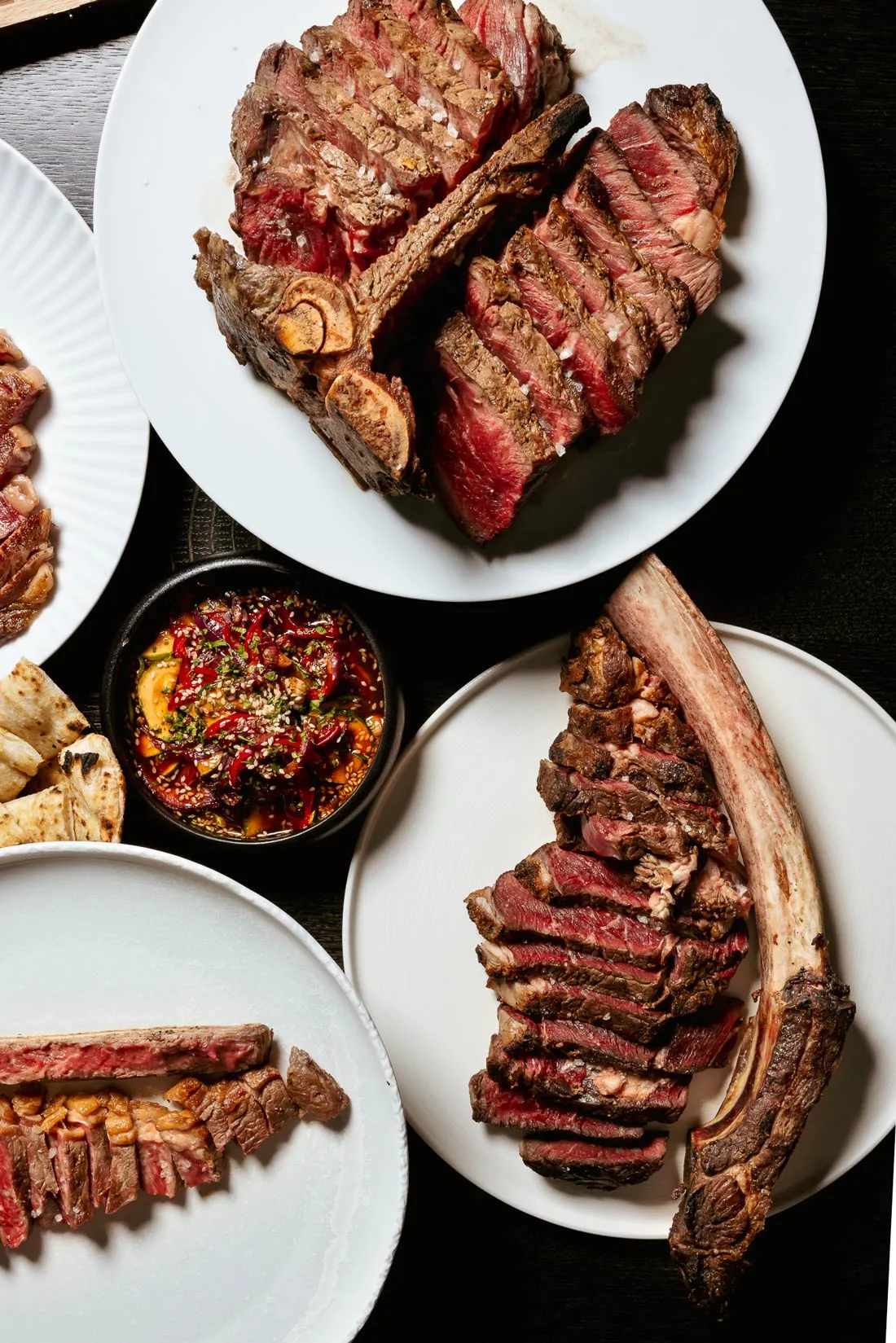
At Bajamonti, we cook the food we want to eat after a long day in the sun. Our kitchen built its name on dry-aged steaks, with several cuts hung for 40 days, alongside Dalmatian classics, homemade pasta, and fresh fish from the morning market.
We bake our own bread, and we source olive oil, prosciutto, and cheese from local farms. The setting helps.
We sit on Prokurative square, in the old Teatro Bajamonti, with a terrace open to the sea and live music most nights. The same setting can also work for private events. And a chilled glass of homemade Pošip pairs with almost anything on the menu.
Fresh Seafood at Adriatic
When you want a meal built around the catch of the day, restaurant Adriatic is where to book. The kitchen keeps things honest in the best Dalmatian way: grilled white fish, black risotto, octopus salad, and shellfish dressed with little more than olive oil, lemon, and parsley.
Settle in near the sea with a bottle of local white and let the evening stretch. For the sea on the plate and in the view, that is the table to take.
Wood-Fired Pizza at Skipper
Some nights call for pizza, and Skipper sends it straight from a wood-fired oven. The crust comes out blistered and chewy, the toppings stay simple, and the prices suit a relaxed family dinner. It hits the mark after a long walk when you want something quick that still shows real care. Order a pie, pour a cold beer, and call it a good day.
How to Spend One Day in Split Old Town
One unhurried day covers the highlights with room for a swim and a long dinner. The route below keeps the walking short and the pace easy.
A Simple Walking Route Through the Old Town
Follow this loop to hit the main sights in order:
- Start at the Peristyle and the Cathedral of St. Domnius early, before the crowds.
- Duck into the Vestibule and the Temple of Jupiter close by.
- Head down to the cellars, then out to the Riva for a coffee.
- Walk north through the Golden Gate to the Gregory of Nin statue.
- Loop back through People’s Square and Fruit Square.
- Finish on Prokurative for dinner as the sun drops.
Best Free Things to See
Most of the Old Town costs nothing to enjoy. Walking the palace grounds, the Riva, and the main squares is free, as is admiring the Golden Gate and rubbing the toe on the Gregory of Nin statue. The cellars’ central passage carries no charge, and the markets cost only what you choose to buy. Save your tickets for the bell tower climb and the cathedral interior.
Where to Stop for a Relaxed Dalmatian Dinner
By evening, the day points back toward the water. We keep a terrace on Prokurative for exactly this moment: steaks off the grill, fresh fish, local wine, and the square filling with music as the light fades.
Book ahead in summer if you want a table outside. After a full day on foot, dinner is the part you slow down for.
Practical Tips for Visiting Split Old Town
A few practical notes make the Old Town easier to enjoy. Timing, footwear, and a parking plan tend to matter most.
Best Time to Visit
May, June, September, and early October bring the best balance for visiting Split Old Town: warm days, a swimmable sea, open terraces, and thinner crowds. July and August turn hot and busy, with the palace packed by midday. Spring and early fall let you walk the lanes in comfort, start slowly with breakfast in Split, and book a dinner table without much notice.
How Long You Need to Explore
Half a day covers the main sights at a steady pace. A full day adds the bell tower, the markets, the hidden lanes, and a proper dinner without any rush. Two days give you time to fold in a swim, a second meal, and a slow morning coffee on the Riva.
How to Get Around Old Town
The Old Town is car-free and built for walking. Stone lanes, steps, and polished pavement fill the center, so comfortable shoes beat any other transport. The ferry port and bus station sit a five-minute walk east, handy for island trips and day journeys. Inside the walls, your own two feet are all you need.
Parking Near Split Old Town
Cars cannot enter the Old Town, so park outside and walk in. The closest options are the garage under the Koteks-Gripe center and the lots near the ferry port, both close to the palace. Street parking near the center fills fast and costs more in summer. For a longer stay, a garage saves the daily hunt for a space.
Accessibility in the Old Town
The Old Town presents some challenges for visitors with mobility needs. Roman streets mean uneven stone, the odd step, and a few steep lanes, though the Riva, the Peristyle, and the main squares stay mostly flat and reachable. Wheelchair users can manage the core with care, and our restaurant on Prokurative offers step-free access. Call ahead anywhere you plan to dine to check the entrance.
Is Split Old Town Worth Your Time?
Split Old Town is absolutely worth your time. Few places let you walk through a working Roman palace, climb a tower for an island view, and eat fresh fish by the sea all in one afternoon. The center stays compact, walkable, and full of life from morning coffee to late dinner.
Spend a day, leave room for a long meal, and the Old Town gives back more than the hours you put in.
FAQ About Split Old Town
What to Do in Split Old Town?
Explore Diocletian’s Palace, climb the St. Domnius bell tower, see the Gregory of Nin statue, stroll the Riva, and end with a seafront Dalmatian dinner.
Is Split Old Town Walkable?
Yes, the Old Town is fully walkable and car-free. Stone lanes connect every major sight within a ten-minute stroll, so comfortable shoes are the only transport you need.
Can You Visit Split Old Town for Free?
Yes, most of Split Old Town is free to explore, including the palace grounds, the Riva, the squares, and the gates. Only the bell tower and cathedral interior charge admission.
What Is the Best Time to Visit Split Old Town?
Late spring and early fall, roughly May through June and September into October, deliver warm days, a calm sea, and lighter crowds, the prime window for the Old Town.